Frank In Geometry Maps

Girl Games Unblocked: Mini Fun

Jurassic Dinosaur Mech Battle
No Wifi Mini Games 2025

Open World: Mini Games Online

Candy Match Puzzle Challenge

Farmer Squid Game Challenge

Maths Quiz with Negative Numbers

Pinata Fiesta Slots
Fit Runner

Granny and Student

Pixel Car Racer

Bubble Man Runner Game

Funny sounds

Fashion Makeup And Dress Up Game
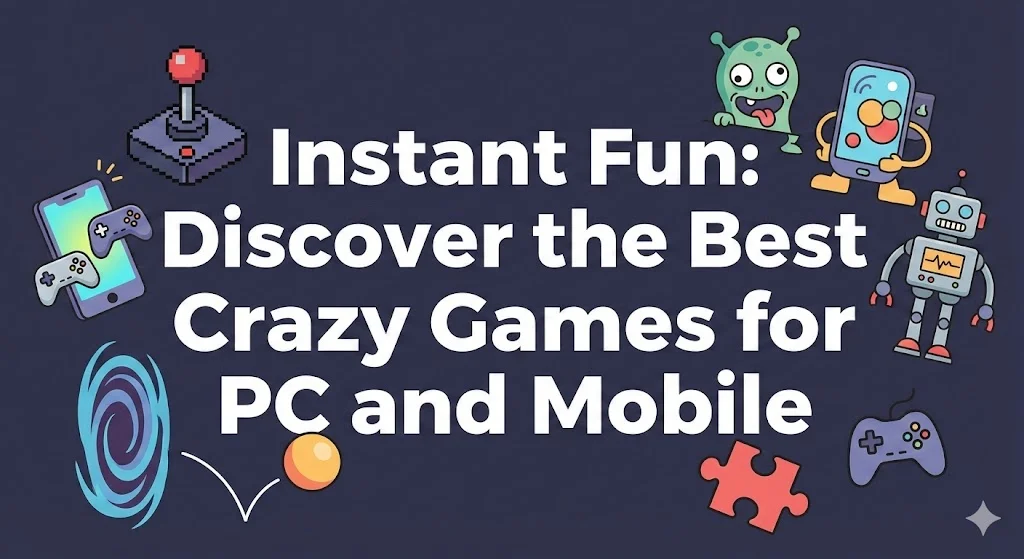
Do you remember when playing a high-quality video game meant buying a console or waiting hours for a huge file to download? Those days feel like ancient history. We have entered a new era where entertainment is just a click away. Browser gaming has evolved from simple Flash animations into complex, multiplayer 3D experiences that rival downloadable titles. Whether you are killing time between classes, taking a break at work, or just relaxing at home, the accessibility of these web-based titles is unmatched.
What makes this genre so fascinating is the sheer variety. You can go from driving a hyper-realistic sports car to battling as a pixelated warrior in seconds. The barrier to entry is non-existent. You do not need a gaming PC with a massive graphics card. All you need is an internet connection and a desire for chaos. If you are looking for a curated list of these wild experiences, you can check out best crazy games to jump straight into the action. These platforms have democratized gaming, making it a social, instant, and free hobby for millions.
But how did we get here? It started with simple experiments in the 90s and exploded with the Flash revolution. Today, modern technology like HTML5 and WebGL allows developers to build incredible worlds that run directly in Chrome or Firefox. If you want to understand the roots of this phenomenon, you can read about the history of the browser game on Wikipedia. It is a fascinating look at how we went from text adventures to full-blown 3D shooters.
When people think of browser gaming, they often picture simple puzzles. However, the first-person shooter (FPS) genre has completely taken over the scene. These are not your average, slow-paced aiming drills. They are fast, competitive, and surprisingly deep. Developers have realized that players want the Call of Duty or Counter-Strike experience without the friction of launchers and updates.
Take Shell Shockers, for example. It sounds ridiculous on paper: you play as an egg armed with a shotgun or a sniper rifle. But once you start moving, you realize the mechanics are tight. You have to manage your ammo, aim carefully, and avoid getting "cracked" by opponents. The brilliant part is the hitbox system—since you are an egg, you are small and hard to hit, which encourages aggressive movement. It is this blend of silly aesthetics and serious gameplay that defines the genre.
Another titan in this space is Krunker.io. If you like fast movement, this is the gold standard. The game uses a voxel art style, similar to Minecraft, which keeps the frame rate high even on older laptops. High-level players use "slide hopping" to move across the map at breakneck speeds, turning simple matches into high-octane duels. It supports mods, custom maps, and a thriving skin economy. It is essentially a full AAA multiplayer experience running in a browser tab.
For many, these shooters are the best crazy games because they respect your time. You can play a match in three minutes. You do not need to commit to a forty-minute ranked game. If you have ten minutes before a meeting, you can jump in, get a few frags, and jump out. That flexibility is what keeps the servers populated 24/7.
Speed is a universal language. You do not need to understand complex RPG stats to enjoy driving a car very fast. The browser gaming world has mastered the arcade racer, offering physics-based driving games that range from realistic simulations to gravity-defying stunt fests.
Moto X3M is a classic example that has stood the test of time. It is a side-scrolling bike racing game where physics are your best friend and your worst enemy. You have to tilt your biker to land jumps perfectly, avoid spikes, and navigate loops. The "crazy" part comes from the level design. One moment you are driving on a beach, and the next you are dodging giant saw blades in an industrial factory. The frustration of crashing is instantly mitigated by the instant respawn button. It creates a "just one more try" loop that is incredibly addictive.
On the 3D side of things, games like Madalin Stunt Cars 2 offer a more open sandbox experience. Here, you are not necessarily racing against a clock. Instead, you are given a massive map filled with loops, ramps, and obstacles, and a garage full of supercars. You can team up with other players online to invent your own games. Maybe you play tag, or maybe you see who can jump the furthest off a specific ramp. This freedom is rare in paid titles, which often force you into a specific career mode.
These driving titles are considered some of the best crazy games because they emphasize fun over realism. In a simulator like Gran Turismo, hitting a wall ruins your race. In these browser games, hitting a wall usually results in a hilarious ragdoll crash that is just as entertaining as winning. It relieves stress rather than creating it.
The ".io" phenomenon changed everything. It started with Agar.io, a game about cells eating other cells. It was primitive, but it was massive. Suddenly, you were in a lobby with hundreds of other real people. This massive multiplayer aspect is now a staple of the web.
Slither.io took the concept and applied it to the classic Snake game. You grow longer by eating glowing orbs, but if your head touches another snake, you die. The strategy is surprisingly deep. A tiny snake can kill the giant leader of the server just by cutting them off at the right moment. This creates a David vs. Goliath dynamic that is thrilling to watch and play. You will often see players teaming up (or betraying each other) without a single word being typed in chat.
Then you have territory conquest games like Paper.io 2. The goal is to cover the map in your color. You leave your safe zone to claim land, but while you are drawing your line, you are vulnerable. If someone crosses your tail, you are out. It is a game of risk and reward. Do you play it safe and capture small chunks, or do you get greedy and try to capture half the map in one go?
These IO titles are undeniably some of the best crazy games available because they are purely social. You are constantly interacting with human intelligence (or lack thereof). The unpredictability of human players ensures that no two matches are ever the same. Plus, the visual feedback of growing huge and dominating the server appeals to our primal desire for progress and power.
Not every game needs to be about reflexes and adrenaline. Sometimes, the "crazy" part comes from how a game messes with your brain. Puzzle and strategy browser games have a rich history of being incredibly difficult and rewarding.
2048 is a prime example of elegant design. You slide tiles to combine numbers, aiming for the elusive 2048 tile. It sounds boring, but it is hypnotic. You start seeing the patterns in your sleep. It is the perfect game to play while listening to a podcast or half-watching a TV show. It engages the logical part of your brain without demanding 100% of your sensory attention.
For those who want more chaos, Happy Wheels is a physics-based puzzle platformer that is legendary for its gore and difficulty. You navigate obstacle courses using characters in wheelchairs, bicycles, or Segways. The catch is that your character's body is soft and breakable. You might finish a level with only a torso and one arm remaining. It is dark humor at its finest and requires precise control to survive the deadly traps designed by other users.
Tower defense games like Bloons TD also fall into this category. The concept of monkeys popping balloons sounds childish, but the strategy required at high levels is intense. You have to manage your economy, upgrade paths, and placement perfectly to survive the later waves. It is a game of escalation. You start with a single dart monkey and end with a screen filled with plasma blasts and stealth bombers.
These strategic titles round out the list of the best crazy games by offering depth. They prove that browser games are not just mindless distractions; they can be genuine mental workouts that challenge your planning and problem-solving skills.
It is worth noting why these games run so smoothly now. In the past, Adobe Flash was the king. It was great for animation but had security flaws and was a resource hog. When Flash died, many feared browser gaming would die with it. Instead, it adapted.
HTML5 and WebGL are the new standard bearers. They allow games to run natively in the browser without plugins. This means better performance, better battery life for laptop users, and most importantly, compatibility with mobile devices. You can play many of these "crazy games" on your phone just as easily as on your desktop.
Cloud gaming is also starting to creep into the browser space. This allows even higher-end games to be streamed directly to a tab. While we are focusing on the native web games here, the line is blurring. In the future, the distinction between a "browser game" and a "console game" might disappear entirely.
With thousands of games released every week, finding the good ones can be overwhelming. The trick is to identify what kind of "crazy" you are looking for.
If you want social interaction, stick to the IO genre. The lobbies are always full, and the mechanics are intuitive. If you want skill expression, the FPS and racing genres are your best bet. These communities often have Discords and clans, adding a layer of depth that goes beyond the browser window. If you want to relax, the clicker and puzzle genres are perfect.
Don't be afraid to try weird titles. Some of the most memorable browser games are the experimental ones that don't fit into a neat box. Games like QWOP, where you control a runner's thighs and calves individually, are frustratingly difficult but hilarious to play with friends.
One of the most beautiful things about this gaming ecosystem is its global nature. When you log into an IO game, you are playing with people from Brazil, Turkey, Japan, and the US simultaneously. Language barriers do not matter when the universal language is survival.
This connectivity has led to a unique internet culture. Memes, strategies, and legends are born in these simple chat rooms. It is a reminder that gaming is fundamentally about connection. We all want to play, compete, and have fun. The browser just happens to be the most accessible playground in the world.
So, the next time you have a few minutes to spare, do not just scroll through social media. Open a new tab and dive into a game. You might just find your new obsession.
1. Are these crazy games safe to play on school or work computers? Generally, yes. Most reputable browser game sites use standard HTTPS protocols and do not require you to download any executable files, which keeps your computer safe from viruses. However, school or work firewalls often block gaming sites to keep you focused. If the site is accessible, the games themselves are usually harmless, but always be mindful of your environment and policies.
2. Do I need a powerful computer to play modern browser games? No, that is the beauty of them. While a gaming PC will give you smoother frame rates in high-end 3D shooters like Krunker, most browser games are optimized to run on low-end laptops, Chromebooks, and even older desktops. As long as your browser (Chrome, Firefox, Edge) is up to date, you should be fine.
3. Can I play these games with my friends? Absolutely. Multiplayer is a huge part of the genre. Games like Shell Shockers or Smash Karts allow you to create private rooms. You simply generate a room code, send it to your friend, and they can join your match instantly from their own browser. It is one of the easiest ways to set up a gaming session.
4. Why did Flash games disappear? Adobe Flash Player was discontinued in late 2020 due to security vulnerabilities and performance issues. It was replaced by HTML5, which is more secure and works better on mobile devices. Luckily, many classic Flash games are being emulated or remastered in HTML5, so they are not lost forever.
5. Are browser games free to play? Yes, the vast majority are free. They are usually supported by ads that play before the game starts or between levels. Some games offer cosmetic purchases (like skins for your character), but the core gameplay is almost always free. You rarely hit "paywalls" that stop you from playing the actual game.


