The Action collection brings together games in which your input directly shapes a moving situation. The useful choice is the kind of action you want to manage: a precise timing decision, the result of a physical impact, or another objective described on an individual game's page. Read those controls before starting rather than assuming every action game uses movement keys, combat, or the same pace.
Last Updated:
Two different ways to approach an action challenge
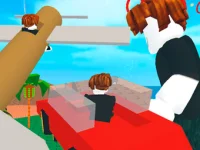
Body Drop uses a dummy, launched balls, and three-dimensional structures. Left-clicking launches a ball, right-clicking rotates the camera, and the mouse wheel changes the view's zoom. Your decision begins with a contact point, then continues through observing the resulting fall. A clear camera angle and a specific prediction make each attempt easier to understand.
Stop The Lock makes alignment and release timing the focus. Its documented challenge includes rotating bars and increasing rotation speed. Here, useful practice means reading the target, distinguishing an early action from a late one, and adapting when the current pace changes. It asks for a different kind of attention from inspecting a physical structure.
Choose by controls, feedback, and session length
Check whether your device provides the documented inputs. A mouse-driven camera may need controls that a touch-only setup does not reproduce automatically. Once a game loads, learn which action commits your decision and which inputs only change the view. That separation prevents an avoidable control mistake from looking like a failed strategy.
For a short session, choose one question to investigate. You might compare contact points in a physics scene or make a small timing correction in an alignment challenge. Let the result resolve and use the feedback actually shown. Do not assume that visual spectacle, rapid clicking, or a familiar genre label guarantees the best outcome.
The Body Drop experiment guide provides a detailed example of observation-based practice. Browse the available cards for other objectives, and use each game's description to decide whether its pace and input method suit the session you want.