
















The Ultimate Playground: Why Minecraft Crazy Games is a Phenomenon
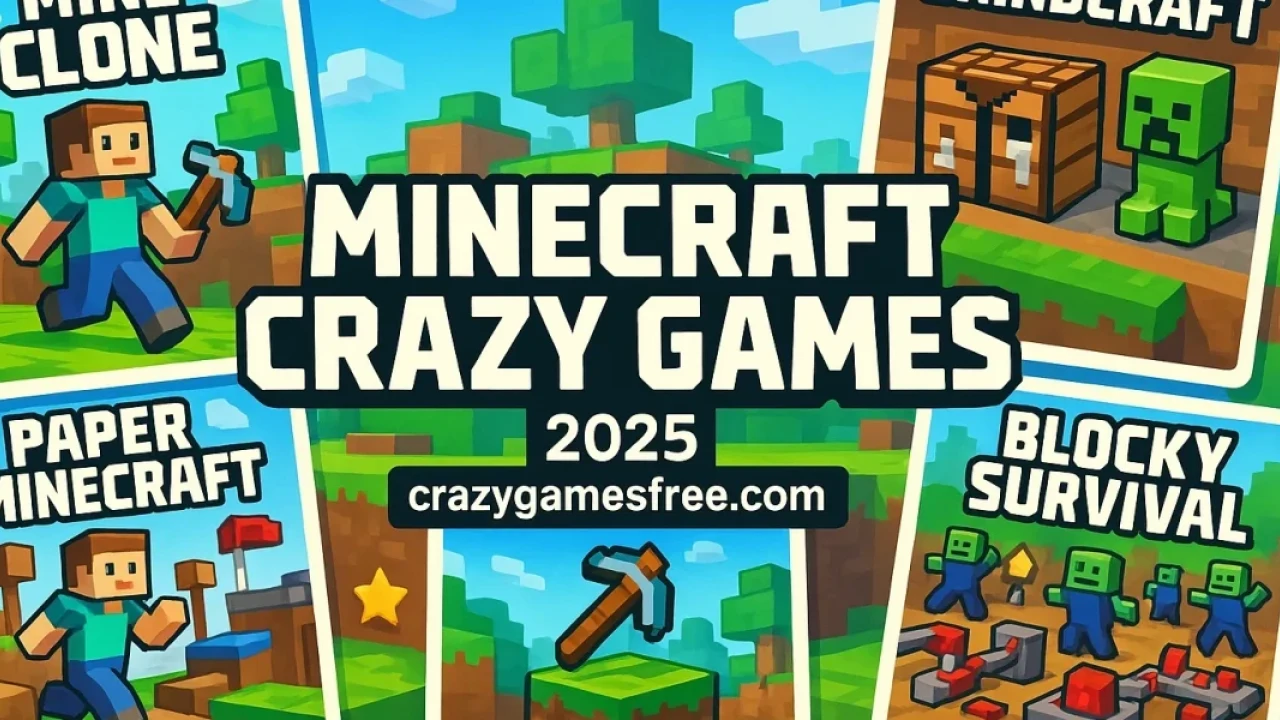
Let’s not overthink it. When people say “Minecraft crazy games”, they mean fast-loading, browser-friendly experiences that feel like Minecraft’s greatest hits creative building sandboxes, survival rush modes, jump-and-pray parkour, mob arenas, sky islands, and crafty mini-adventures. Same blocky logic, same “I can build anything” energy just trimmed for instant play. No giant downloads, no modpack upkeep. Click → spawn → start cooking.
At the core sits the same timeless loop: gather resources, craft tools, carve out shelter, then either build something beautiful or survive something ridiculous. The charm is how predictable rules (blocks, recipes, mobs) unlock unpredictable stories. That’s why “crazy” modes pop: they compress the sandbox into snackable, high-tempo sessions without dumbing it down. Whether you’re a chill builder or a sweaty grinder, the format respects your time and still lets you flex.
🧭 Quick Primer: Survival, Creative, Parkour, Arena (Pick Your Chaos)
-
Survival Sprint: Short day/night cycles, aggressive mobs, scarce food. You learn resource routing and panic-crafting real quick.
-
Creative Chill: Infinite blocks, fly mode, zero pressure. Practice architecture, test redstone ideas, or vibe while placing lanterns and leaves.
-
Parkour / Time Trials: Precision movement, checkpoint logic, momentum tech. It’s you vs. physics with ladder grabs, ice slides, and trapdoor baits.
-
Arena / Mob Waves: Condensed combat arenas with escalating hordes. Build chokepoints, funnel mobs, manage aggro, and pray your hotbar discipline holds.
Rotate between these and boredom can’t catch you.
🔗 🧱 Minecraft Crazy Games Curated Hub (Start Here) 🧱
This is your shortcut to the good stuff. The hub neatly groups Minecraft-style builders, parkour tests, survival dashes, and arena brawls so you can bounce between modes without endless searching. Expect quick loads, a spread of difficulty, and new entries dropping often. If your sessions are 10–20 minutes, keep this page pinned. One tab, infinite block chaos.
📚 Context That Actually Helps (Natural Backlink)
New to block worlds or just curious why they’re so adaptable? Skim the overview of Minecraft on Wikipedia’s Minecraft page. It outlines open-ended sandbox design, crafting systems, and redstone’s logic-gate behavior context that makes parkour maps, survival rushes, and creative builds “click” faster. Understanding those fundamentals means you ramp smoother in any mini-mode that riffs on them.
⚙️ The Core Loop, Sans Fluff
-
Spawn → Gather → Craft (wood → stone → iron equivalents).
-
Upgrade (faster gather, sturdier tools, safer fights).
-
Engage (mobs, puzzles, jumps, timed waves).
-
Payoff (checkpoint PBs, wave milestones, or a clean build).
It’s simple, readable, and endlessly replayable. That predictability is the cheat code: you can jump into any “crazy” variant and instantly understand the stakes.
🧠 Beginner Wins (First 60 Minutes)
-
Carry the Trinity: blocks, food, spare pick.
-
Torch Rule: put torches on the right going in; follow left to get out.
-
Hotbar Discipline: Slot 1 = primary tool, 2 = blocks, 3 = weapon, 4 = food. Reduce panic swaps.
-
Parkour Reset: After a fail, step back, center crosshair, breathe, then jump.
-
Mini-Base: Crafting table + furnace + chest + bed (if allowed). Organization makes you faster.
📈 From Competent to Cracked (Hours 2–5)
-
Movement Tech: ladder catches, corner clips, momentum chains.
-
Micro-Automation: tiny smelter, auto-door, or simple crop loop if redstone is on the menu.
-
Threat Triage: prioritize fast/light mobs; heavies are free once the swarm thins.
-
Choke Points: stairs, fences, and slabs that break pathing low cost, huge value.
-
Checkpoints as Ritual: in parkour, treat checkpoints like pit stops: re-center, pre-aim, go.
🔌 Redstone = Baby Game Engine (30-Second Crash Course)
-
Dust: carries signal.
-
Repeaters: extend/delay signal (and fix direction).
-
Comparators: compare/read container states aka inventory brains.
-
Pistons/Sticky Pistons: move blocks, doors, bridges, traps.
-
Observers: detect updates; great for clocks and “something changed” logic.
These five parts turn “building blocks” into interactables doors that time themselves, elevators, trap corridors, item sorters. Even tiny browser maps feel deeper when redstone’s on the table.
🗺️ Map DNA: What Makes a Session Pop
-
Decision by 30s: rush iron, turtle up, or explore? Commit early.
-
Readable Communication: colored wool lines, arrow signs, obvious vein clusters.
-
Micro-Goals: 90-second tasks craft a shield, hit checkpoint C, clear wave 3.
-
Escalation: tighter jumps, stronger mobs, thinner resources.
-
Brag Moment: PB screen, fireworks, or unlock. Reward the grind.
🎯 Difficulty Curve Without Drama
Good maps widen breadth (more systems) before they deepen execution (tight windows, perfect timing). If you’re stuck, you likely skipped a breadth step: carry more torches, tidy your hotbar, or stock food. Small fundamentals smooth the spike.
🛠️ Performance Tips (Even in the Browser)
-
Cap FPS to your display or a stable value; consistent timing beats spikes.
-
Kill Heavy Tabs: yes, the 20 open videos are stealing frames.
-
Trim Graphics: if settings exist, lower render distance first.
-
Sens Settings: slightly lower DPI for build precision, slightly higher for arena flicks.
-
Keybinds You’ll Actually Reach: sprint, crouch, place no finger yoga.
🧱 How to Build Stuff That Doesn’t Look Mid
-
Palette Discipline: 3–4 block types plus one accent.
-
Silhouette First: varied rooflines → instant “not a shoebox.”
-
Fake Shadows: stairs and slabs for depth without shaders.
-
Framing: logs/stone brick on edges sells structure.
-
Landscaping: leaves, fences, lanterns; path blocks for “lived-in” vibes.
🧟 Mob Combat Without Getting Clowned
-
Spacing Over Spam: time swings, backstep between hits.
-
Vertical Cheese: one-block ledges, slabs, fences break pathfinding.
-
Peek Angles: corners plus bows equals free damage.
-
Consumables Rolling: treat food like a buff keep it active.
-
Target Priority: fast mob first, then ranged, then heavy.
🧗 Parkour Fundamentals (No Tears Edition)
-
Center Crosshair: aim for block centers; corners are trolls.
-
Bank Momentum: don’t full-stop between jumps unless required.
-
Ladder/Vine Catches: look slightly up, hold into the surface.
-
Ice/Trapdoor Tech: tiny counter-strafe beats big overcorrections.
-
Mental Reset: miss → breathe → recenter → send.
🧪 Three Plug-and-Play Session Templates
30-Minute Survival Dash
-
5m: wood/stone/food.
-
10m: iron, craft shield/tools.
-
10m: cave sweep, breadcrumb torches.
-
5m: smelt, upgrade, stash loot.
20-Minute Parkour PB Hunt
-
5m: isolate and lab the 3 hardest jumps.
-
10m: full run with safe strats.
-
5m: hotlap and send for PB.
25-Minute Duo Arena
-
5m: build a funnel and roof.
-
15m: waves 1–5; rotate aggro, kite, repair.
-
5m: restock, mini-upgrade, screenshot the W.
🧰 Tiny Habits, Big Gains
-
Keep 64 Blocks at all times. Panic bridges save lives.
-
Torch Every 8–10 Blocks in caves. Navigation is a multiplier.
-
Recipe Muscle Memory for tools, torches, shields speed = safety.
-
Screenshot Seeds you like. Future-you wants those vibes.
-
Label Chests with signs; clutter is secret difficulty.
🧩 Common Mistakes (And Fixes)
-
Hoarding Ore: craft upgrades now; faster tools create more ore later.
-
Hotbar Chaos: standardize layout so emergencies aren’t scavenger hunts.
-
No Exit Plan: carve ladder shafts, water drops, or rooftop paths.
-
Torch Poverty: craft more. Darkness is a difficulty debuff.
-
Mode Monotony: rotate Survival/Parkour/Arena/Creative to avoid burnout.
🌐 Why Voxels Just Work for Web Games
Voxels are 3D “pixels.” They make fully destructible terrain trivial, keep geometry reasoning simple, and deliver wild landscapes (caves, arches, overhangs) without hacks. Translation: even lean browser builds can sell “real” worlds, enable crafty destruction, and stay readable for new players. It’s the perfect tech/style fit for quick sessions.
🔮 The Ongoing Hype Cycle (Why It Stays Fresh)
The broader Minecraft ecosystem evolves steadily new blocks, new mobs, new decor, plus a constant drip of creator maps and challenge ideas. That gravity pulls browser riffs forward too. When the flagship game pushes a mechanic, creators remix it into parkour lines, survival rulesets, or puzzle contraptions. Net result: “Minecraft crazy games” never sit still; there’s always a new run worth your 15 minutes.
🧭 Who Is This For? (Short Answer: Everyone)
-
Casuals: creative zen or checkpoint parkour with generous saves.
-
Try-hards: wave 20 arena, no-death cave sprints, PB chases.
-
Builders: rapid prototyping of styles or redstone micro-labs.
-
Party People: pass-the-keyboard parkour races and “one more wave” dares.
Session length scales to your life 5 minutes or two hours, it’s the same block grammar fueling new stories.
🧱 From Web Mode to Full Sandbox (If You Want the Deep End)
If the quick-play vibe awakens the itch for a megaproject: that’s the full Minecraft experience. Expect more biomes, systems, redstone depth, farms, and building toys. The fundamentals you honed in mini-modes (movement, hotbar discipline, spatial planning) transfer perfectly now you just have more canvas to paint on.
❓ FAQ Minecraft Crazy Games
Q: What are “Minecraft crazy games” in one sentence?
A: Browser-friendly block games build, survive, parkour, or arena built around Minecraft-style rules and short, satisfying sessions.
Q: Do I need mods or a launcher?
A: Usually no. The vibe is instant play. Some entries may offer optional downloads, but the baseline is click-to-start.
Q: Can I actually improve at real Minecraft here?
A: 100%. Movement fundamentals, hotbar flow, block placement, and redstone logic all transfer.
Q: Is there creative mode in these collections?
A: Often yes expect build rooms, free-fly maps, and challenge prompts for architecture practice.
Q: I keep getting lost underground. Fix?
A: Torch-right going in, follow left out. Drop signs or cobble pillars at intersections. Simple breadcrumbs, huge sanity.
Q: Why do voxel worlds feel so good for web games?
A: They’re easy to reason about and fully destructible, which sells “freedom” even on lighter runtimes.
Q: Where should I start?
A: Hit the curated hub: Minecraft Crazy Games. It’s tidy and constantly refreshed.
Q: Will this scene stay alive?
A: Yep. The main sandbox keeps evolving, and creators keep remixing new blocks or mechanics mean new challenge maps and modes.